Zinc Acetate
Zn(C2H3O2)2
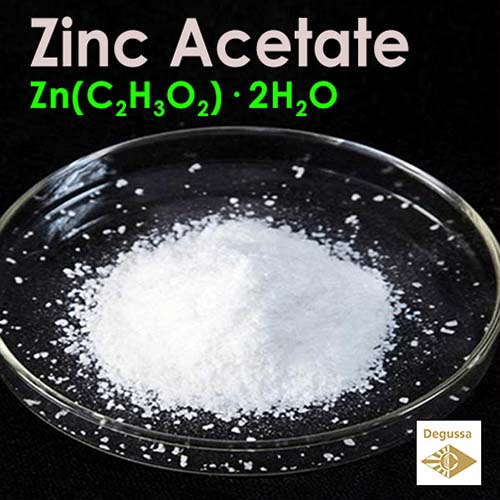
Zinc acetate is a salt with the formula Zn(CH3CO2)2, which commonly occurs as the dihydrate Zn(CH3CO2)2·2H2O. Both the hydrate and the anhydrous forms are colorless solids that have been used as dietary supplements. Zinc acetates are prepared by the action of acetic acid on zinc carbonate or zinc metal. When used as a food additive, it has the E number E650.
More about Zinc Acetate can be found on Wikipedia
Formula: Zn(C2H3O2)2· 2H2O (dihydrate)
Molecular Weight: 219.50 g/mol
Form: White crystalline solid
CAS Number: 5970-45-6
E number: E650
Density: 1.735 g/cm³
Synonyms: ZINC ACETATE, Zinc diacetate, Zinc(II) acetate, Acetic acid, zinc salt, Dicarbomethoxyzinc
Zinc Acetate
- Brand: Degussa
- Product Code: Oxide - Zinc Acetate
- SKU: Zn(C2H3O2)2
- Availability: 343
-
0.59€
Available Options
Related Products
-nitrate-LQ-200x200.jpg "COPPER NITRATE - Exploring the Wonders of Cupric Nitrate: Properties, Uses, and Applications")
COPPER NITRATE - Exploring the Wonders of Cupric Nitrate: Properties, Uses, and Applications
Cu(NO3)2 Copper(II) NitrateUses:Catalysis: Copper(II) nitrate is used as a catalyst in various chemical reacti..
0.59€
Cobalt(II) aluminate - Cobalt aluminate blue spinel - substitute Cobalt Oxide
CoAl2O4 Cobalt(II) aluminate - Cobalt Blue cobalt(2+);oxido(oxo)alumane. Bright blue ceramic CoAl2O4 nanocrys..
0.99€
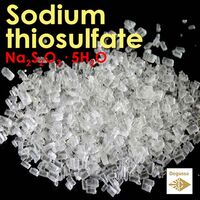
Sodium thiosulfate - Versatile Applications of Sodium Thiosulfate: From Photography to Water Treatment
Na2S2O3 Sodium thiosulfate, also known by its chemical formula Na2S2O3, is a versatile inorganic compound that has ..
0.59€
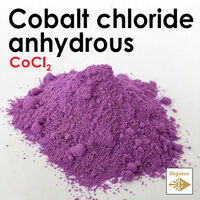
Cobalt Chloride: Pigments, Catalysts, Indicators, and Beyond
CoCl2 Cobalt (II) chloride anhydrous, also known as Cobaltous Chloride, is a beautiful sky blue color. It is genera..
2.99€ 3.99€
Tags: oxide